What to Bring for the La Concha Hike According to a Marbella Local
Diego Guerra Narváez · Marbella local⏱ 6 min read
I have seen everything on La Concha: people in flip-flops, with 33 cl bottles, no hat in August and a phone at 12 % battery. This list is not theoretical — it is what I carry every time I hike, refined after 15+ years on this mountain.
Hiking La Concha is not a stroll along the seafront. It is a technical route where terrain and weather change the rules in minutes. Here is the exact gear so your day ends with a summit photo — not a rescue.
If you're missing anything on this list, don't go. It's that simple.
📊 Exact quantities by season
Gear
Spring/Autumn
Summer
Winter
Water
2 L
3 L min.
1.5 L
Sunscreen
SPF 30+
SPF 50+
SPF 30+
Thermal layer
Fleece
Not needed
Down + windproof
Hat/buff
Cap
Cap mandatory
Wool beanie
Headlamp
Yes (short days)
Yes
Essential
Start time
8:00–9:00 am
Before 7:00 am
9:00–10:00 am
⚡ 30-second summary
🥾Footwear: Vibram or Contagrip sole · NO urban sneakers
💧Water: 2 L (autumn/spring) · 3 L (summer) · 1.5 L (winter)
📱GPX track downloaded offline · no mobile coverage on the trail
🧥Always a windbreaker · wind at the ridge is constant
✓ Private tour · ✓ Free cancellation 24 h · ✓ Pay later
Essential gear for hiking La Concha
🥾
Mountain footwear with Vibram sole
La Concha's limestone is sharp and loose. You need proper trail shoes or ankle-support boots — ankle sprains on the descent are the most common accident — with a high-grip sole (Contagrip or Vibram are the benchmark).
🏆 My favourites: Nnormal Tomir 2.0, Asics Trabuco or any boot with ankle support and Vibram sole.
No water sources on trail. 3L minimum in normal conditions. 3.5L in summer. A 500ml bottle is not enough for the full route — this is the most common dangerous mistake tourists make.
📱
Phone at 100% with GPS track downloaded offline
Almost no mobile signal on the entire trail. The GPS track must be downloaded before leaving the car park. Without internet, you cannot download it once you are on the trail.
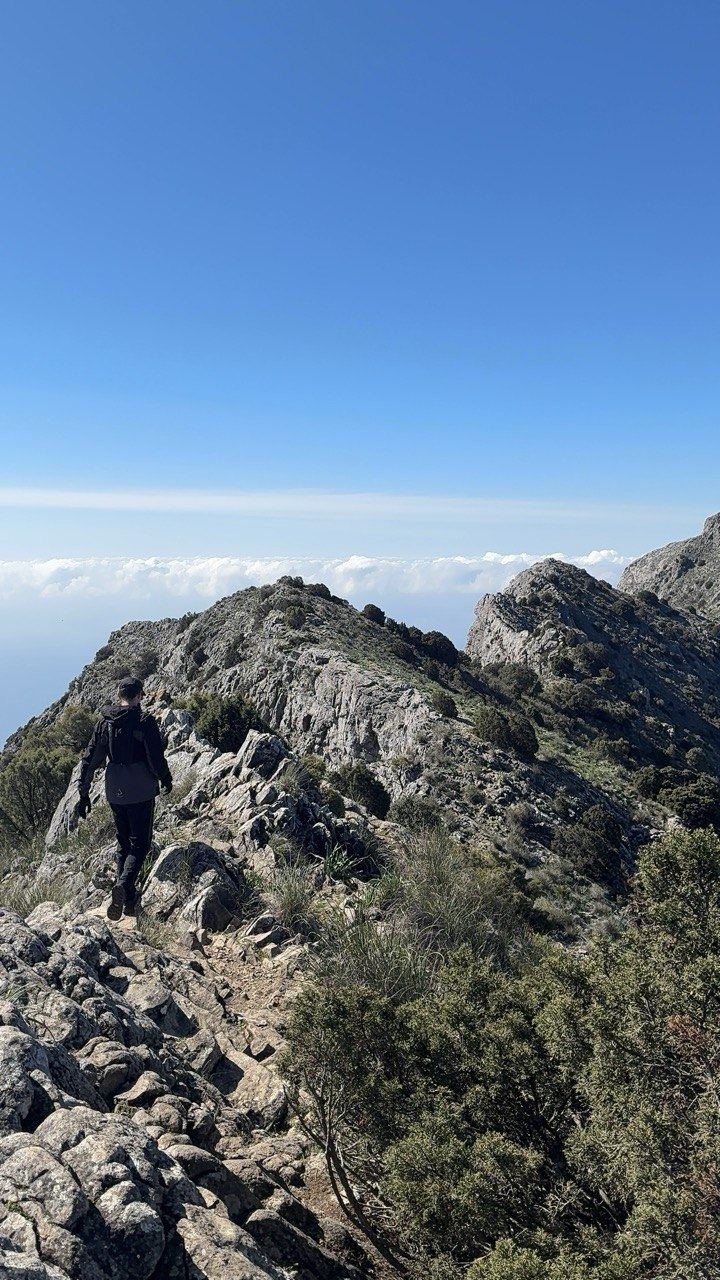
The gear in action — 20 L backpack and technical footwear on one of the rocky sections
📲 BEFORE BUYING THE GEAR
Take the full PDF guide with the detailed list, recommended brands and the GPX track on your phone. Up there you'll have no signal to look anything up.
Free · No signup · PDF + GPX
Sun and thermal protection: the most underrated
☀️ THE SUN ON LA CONCHA IS BRUTAL
The sun does not just come from above — it reflects off the Mediterranean Sea and the white limestone of the sierra, multiplying the effect on your skin and eyes.
🧢
Cap or wide-brim hat
The upper sections have no vegetation or shade. A hat that covers the back of the neck is better than a standard baseball cap.
One application before you start is not enough. Always carry the bottle and reapply at the summit — the descent burns too, and fatigue means you often do not notice until it is too late.
Do not go up with fashion sunglasses. Look for lateral protection and category 3 lenses — the summit is one of the highest UV exposure areas on the Costa del Sol.
Do not be fooled by the heat at the bottom. The ridge is almost always windy and arriving at the summit soaked in sweat, the wind chill can cool your body in minutes. It is the most underrated and most necessary piece of kit on this trail.
Weighs 50 grams, takes up the space of a fist and can save your life. If someone suffers a fall or injury on the ridge, a thermal blanket retains body heat until rescue arrives. Most people do not carry one because they have never needed it — until the day they do.
La Concha does not have one fixed season — it has four, each demanding something different. This table tells you exactly what to wear depending on when you go.
SEASON
WHAT TO WEAR
🌸 Spring / Autumn
Technical t-shirt + fleece or softshell + light waterproof jacket + leggings or technical shorts.
☀️ Summer (if you go)
Long-sleeve technical top (sun protection), shorts, cap — mandatory, SPF 50+ sunscreen.
❄️ Winter / Cold days
Thermal base layer + fleece + windproof or waterproof jacket + gloves + wool hat.
💡 THE 3-LAYER RULE
In mountain hiking, always dress in layers: base (wicks sweat), mid (retains heat) and outer (protects from wind and rain). You can remove layers on the way up and add them at the summit — the ridge wind can be brutal even in summer.
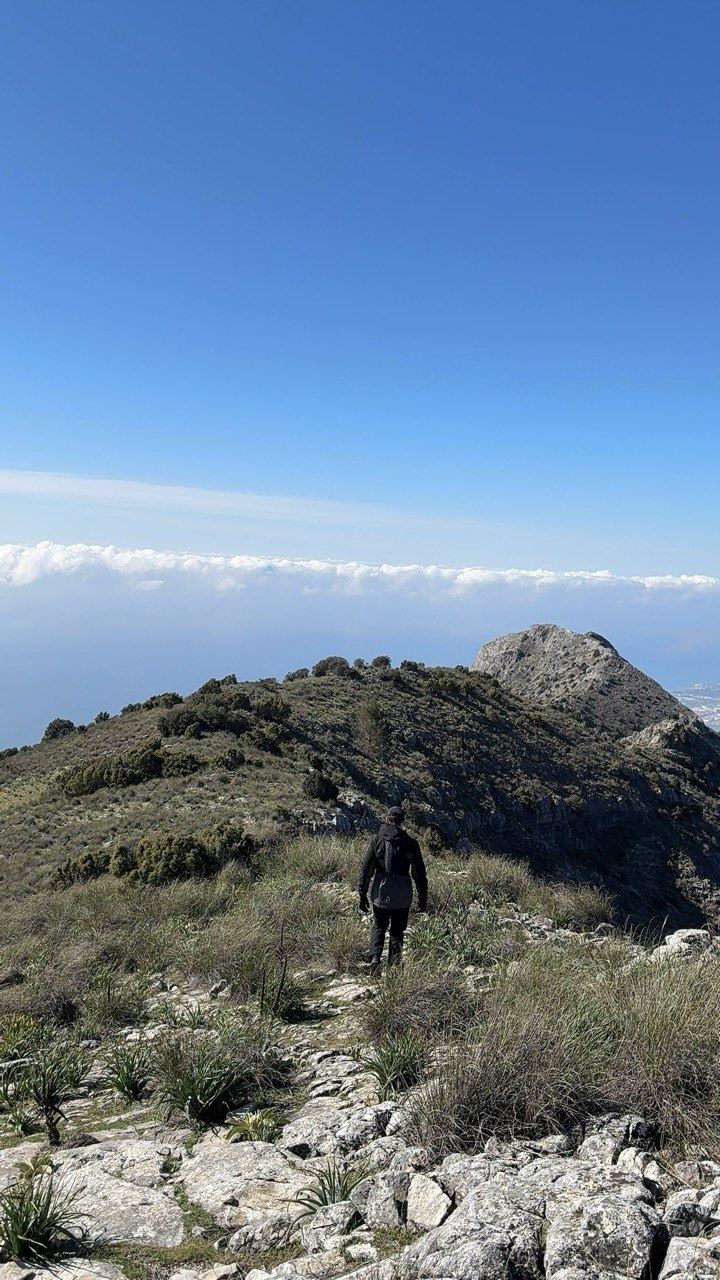
On the ridge near the summit — thermal layer and windbreaker always in the backpack
The one item nobody carries that could save your hike
⭐ CONSEJO VITAL
Electrolyte tablets — No Cramp or Apple Cider Vinegar
People carry plenty of water but forget about salts. In Marbella you sweat heavily due to the heat and sea humidity. If you only drink water without replacing minerals, you dilute your electrolytes and muscle cramps follow — in the worst possible place: the ridge, with sheer drops on either side.
When I pull out a No Cramp and offer it to someone suffering cramps on the descent, they look at me like I am a magician. They take up almost no space, weigh nothing and can turn a painful descent into an enjoyable one.
Do not rely solely on your phone battery. A watch with the track loaded lets you follow the route from your wrist and alerts you if you stray off course.
The best boots are useless with cotton socks. You need moisture-wicking fabric and reinforced toe and heel sections. A good technical sock stops your foot sliding inside the boot — which is what causes blisters.
Technical poles absorb up to 25% of the impact on each step, protecting knees on the loose stone sections. Their quick-fold system lets you pack them away on the scrambling sections.
SPF 50+ sunscreen applied (and bottle in backpack)
Category 3 sunglasses with lateral protection
Hat or cap
Windproof jacket in backpack
Emergency thermal blanket
Trekking poles (optional but highly recommended)
Energy food for the summit
Someone knows where you are and your expected return time
❌ WHAT NOT TO BRING
Gym trainers or flip-flops — flat soles slip on wet limestone. · Small water bottles — 500ml is not enough. · Low-battery phone — if it dies, you lose your navigation reference entirely.
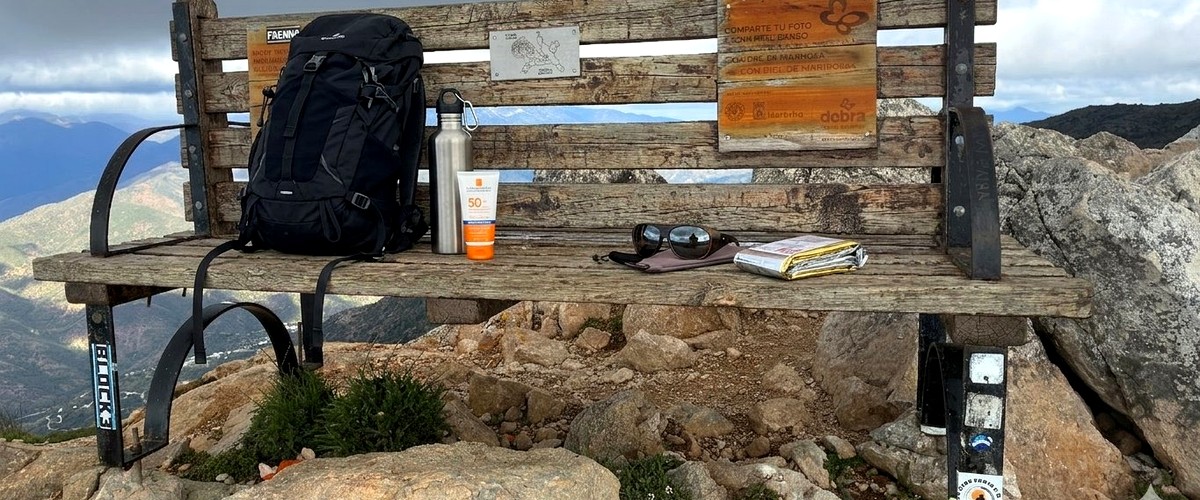
📥 Visual summary of the gear — save this image to review before every hike
Got the gear. What about the route?
The kit is half of it; the other half is knowing the way. If you'd rather not worry about navigation or the technical sections, a mountain guide takes care of everything:
Frequently asked questions about gear for La Concha
What footwear is best for hiking La Concha?
You need hiking boots or trail shoes with Vibram-style soles and mid-high ankle support. The sole has to grip on loose rock and the ankle needs protection — Salto del Lobo and the Chain Pass don't forgive a slip. Running shoes or street boots, no.
How many litres of water should I bring for La Concha?
2 litres per person in spring or autumn · minimum 3 litres in summer. There are no fountains on the entire trail. If you go between June and September with only one litre, you won't reach the summit in good condition.
Do I need trekking poles for La Concha?
Not mandatory, but on the descent they reduce knee impact by up to 25 %. If you have joint issues or carry weight, take them. If you've never used them, don't try them out here — the Chain Pass is easier with both hands free.
What to bring for La Concha in summer?
Same as the rest of the year, but with 3 L of water minimum, a mandatory cap, SPF 50 sunscreen, category 3 sunglasses and electrolytes. And leave before 7:00 am. Read the dedicated summer guide first.
Do I need a headlamp even if I hike during the day?
Yes. Always. It's the item nobody packs and the one that has prevented most rescues. If the hike runs long, fog rolls in, or there's a minor injury, you can find yourself walking back in the dark. It weighs 50 g and gives you 6 hours of battery.
Can I hike La Concha in regular clothes?
No. You need technical breathable fabric (no cotton) and thermal layer + windbreaker in your backpack even if you start with heat. Temperatures on the ridge can drop 10 °C below Marbella the moment Levante wind kicks in.
What size backpack is ideal for La Concha?
An 18–25 litre backpack with hip belt and ventilated back panel. Enough for 3 L of water, extra layers, food, first aid kit and headlamp. Bigger is overkill; smaller won't fit it all.
Want to take this guide with you on the trail?
The La Concha Expert Digital Guide includes the offline GPX track for your phone, photos of every technical junction, GPS coordinates of key points and everything you need for your hike to go well.
The GPS that never fails · Works without signal · Instant download