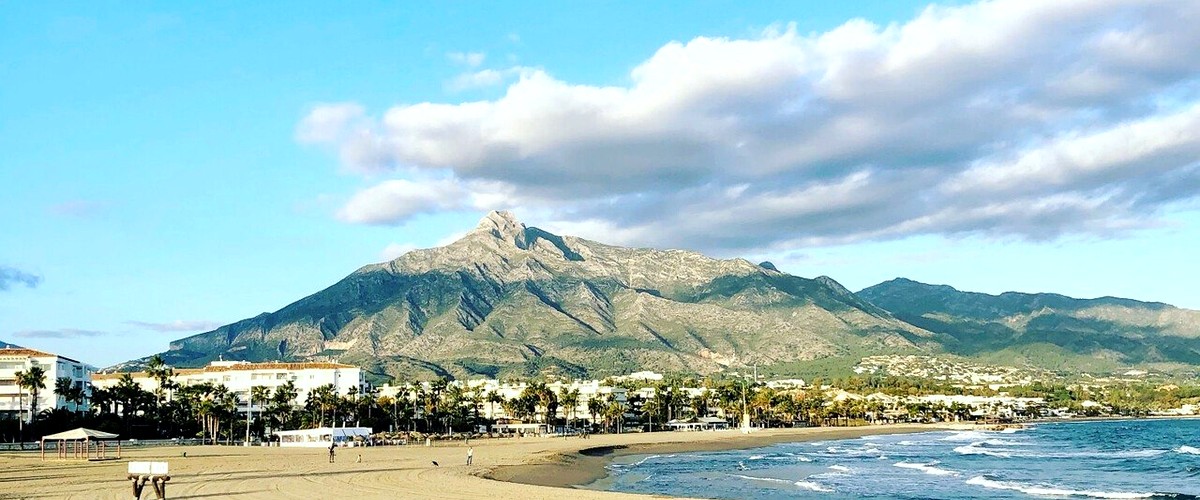
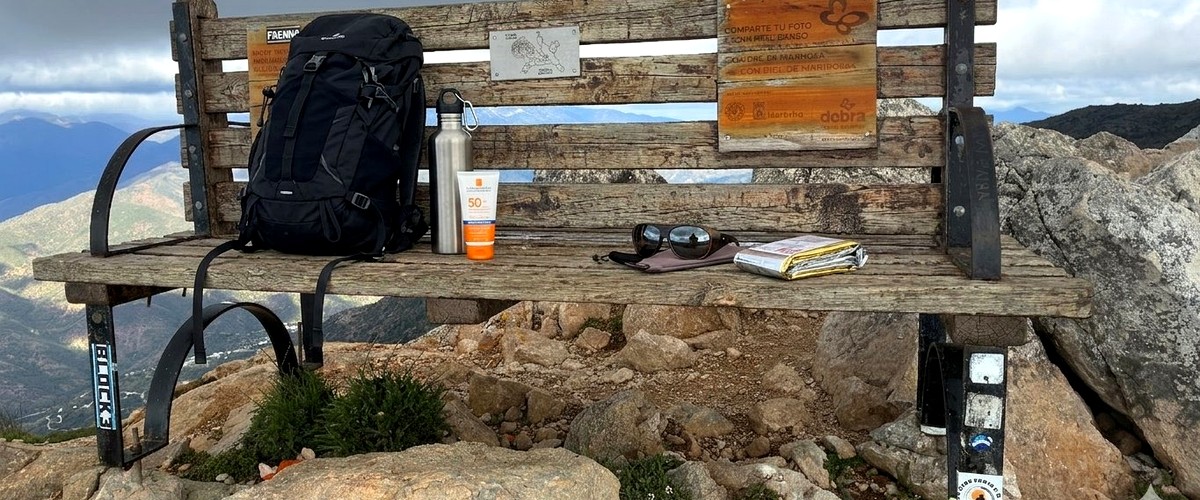
Climbing La Concha with your kids can be the best experience of the year — or a day you remember for the wrong reasons. The difference comes down to three things: the child's age and ability, knowing which sections to avoid, and starting the day with a clear plan B.
I'm from Marbella. I've been hiking La Concha for years and answering the question I get most often: "Can I hike it with my child?". The answer isn't a simple yes or no — it depends. In this guide I explain exactly how to decide, which route to take and what to avoid.
✓ Transfer from Marbella · ✓ Free cancellation 24 h · ✓ Ages 11+
The minimum age I recommend is 12 years old, and always accompanied by an adult with previous mountain experience. It's not an arbitrary number: it's the age at which most children have enough motor coordination, focus and stamina for a 6-7 hour route with technical sections.
But age isn't everything. More important than the number of years is previous experience:
💡 My tip: Before considering La Concha, try the climb to Cruz de Juanar with your child (5.6 km, 4-5 h, less technical sections). It starts from the same parking. If they do well and ask for more, you know they're ready.
The Wolf Jump is the first technical section you'll encounter on the climb. The good news: children can do this one with direct supervision from the adult.
Why can kids handle it? Because it's a passage of coordination, not exposure. The terrain has good handholds and footholds, and although you need to be careful, there's no risk of a long fall if done correctly.
When hiking with children, the general rule is that the most experienced adult walks behind. That way you keep them all in sight, you can control the pace, prevent them from scattering, and stop a fall from a position of support.

Exceptions — the adult goes in front:
If there are two adults, the ideal setup is to alternate: one in front and one behind, with the child in the middle. Constant supervision from both sides.
After the Wolf Jump comes the Chain Section — the most well-known (and feared) part of the standard La Concha route. Unlike the Wolf Jump, this one you must avoid with kids. It's an exposed passage with a drop of several metres on one side, where chains are fixed to the rock as a handhold. For an experienced adult it's manageable; for a child it's unnecessary exposure to risk.
Here's the good news: you can avoid it completely.
There is an alternative path that goes around the Chain Section via the north face of the mountain. It's a clear trail, with no drop-off, that leads you up to the summit without exposing the child to the technical passage.
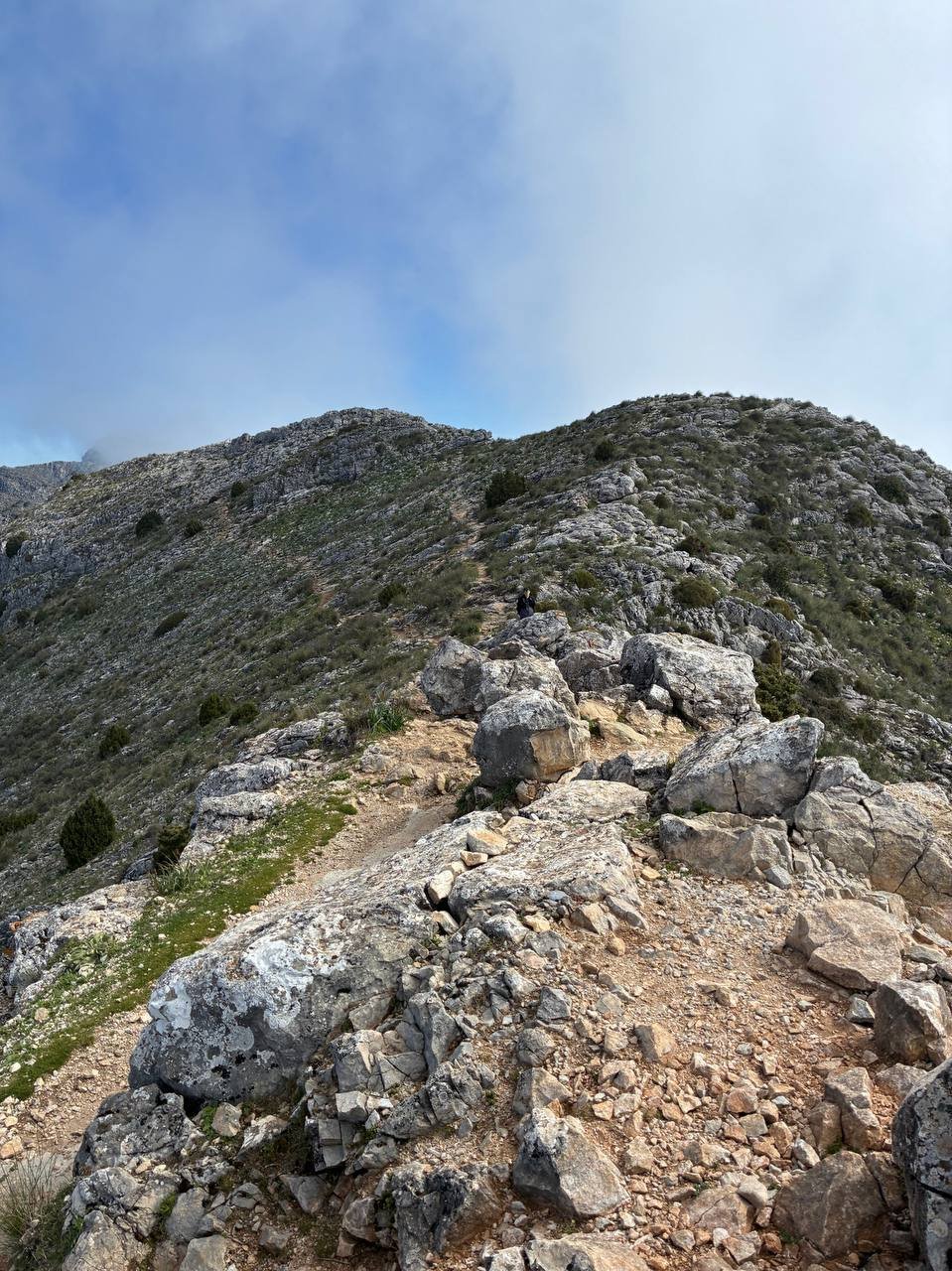
Features of the north variant:
It's the option I always recommend when families hike with me, and also for people with vertigo, with no experience on chain passages, or who simply prefer a calmer trail.
Hiking with kids and want peace of mind?
If you'd rather not take sole responsibility for the technical sections with little ones, a certified mountain guide handles the route and adapts the pace to the family (tour for ages 11+):
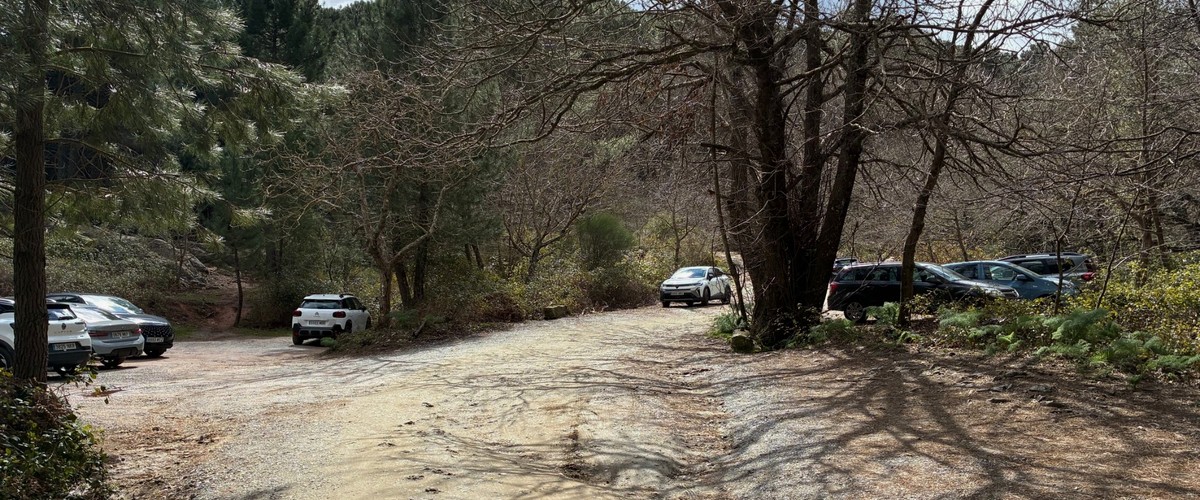
Starting point: the Refugio de Juanar parking, in Ojén. With kids it's essential to arrive early: you have margin for the day and avoid the heat of midday.
First section of 1-1.5 hours of sustained climb on forest track then trail. Assessment point: if the child arrives here already very tired, better to turn back without guilt. The crossing is flat and has shade for resting.
At the crossing: go straight ahead, DO NOT turn left (that leads to the viewpoint).
Technical section of 15-30 minutes. Cross with the child following the instructions in the previous section.
This is where the variant matters: do not continue along the exposed Chain Section. Take the north face trail that goes around the exposed passage.
You made it! Views over Africa, Gibraltar and the entire Marbella coast. Long break here: eat, hydrate, take photos. Don't stay more than 30-40 minutes — the descent is what will take you most time.
Same way back. Most incidents with children happen on the way down — tiredness, rushing, shortcuts. Three rules:

The basic gear is the same as for any La Concha hike (see my full guide on what to bring for the La Concha hike), but with some specifics for families:
Key rule: the child's backpack should not weigh more than 10% of their body weight. A child of 35 kg → maximum 3.5 kg. If they carry more, it will destroy their back and tire them twice as fast.
What the child SHOULD carry: their water, their snacks, a thermal layer. What they should NOT: extra water, adult sandwiches, the first aid kit.
With kids the choice of season is even more important than for adults. The ideal periods:
This is the most important question of all — and the one that's most often handled badly. Turning back is not failing. Forcing a tired child is gambling with their safety.
If the child reaches the crossing (1-1.5 h from the parking) already very tired, it's recommended to turn back from there. The climb from the crossing to the summit is the most demanding, and most incidents on the descent happen when the child was already at their limit at the top.
In any of these cases: stop, hydrate, eat something sweet, rest for 20 minutes. If it doesn't improve, turn back. La Concha will still be there — you can always return another day.

The minimum recommended age is 12, always accompanied by an experienced adult. Below that age, the technical sections require a level of coordination and stamina that most younger children don't have. More important than age is previous experience: a 12-year-old who has done long routes is better prepared than a 14-year-old with no mountain experience.
Yes, children can pass the Wolf Jump without issue when accompanied by an adult. It's a technical section but not dangerous if done calmly and with direct supervision. The key: go one after the other, maintain visual and verbal contact, and don't let the child go ahead alone.
There is a variant along the north face that avoids the Chain Section. It's a clear path with no drop-off that goes around the most exposed section and still reaches the summit. It's the recommended option for hiking with kids, and also the best for people with vertigo or no experience with chain passes.
The complete route with kids takes between 6 and 7 hours, compared to 4-6 hours for adults. You need to add time for frequent breaks, hydration, lunch at the summit and a more careful descent. Best to plan for 7 hours and return with margin.
Beyond the standard gear, with kids you should bring: varied snacks every hour, an extra thermal layer (children get cold faster on the ridge), reinforced first aid kit with blister plasters, power bank for the phone. Distribute weight so the child carries no more than 10% of their body weight.
April, May, October and November are ideal months: mild temperatures, long days and maximum visibility. Avoid July and August (extreme heat, dangerous for children), January-February (intense cold on the ridge) and days with Levante wind forecast (dense fog on the summit).
Yes. If the child hasn't done long routes before, a good test hike is the Cruz de Juanar (5.6 km, 4-5 h, less technical sections). It starts from the same Refugio parking. If they handle it well and enjoy it, you can try La Concha another time.
Turn back without guilt. La Concha will still be there — you can always return another day. The reasonable point to abandon is the Juanar Cirque Crossing: if the child arrives there already very tired, better to turn back from there. Forcing a tired child to continue is the recipe for an accident on the descent.
FREE
Complete PDF + GPX Track · Sent straight to your email
No spam, promised. Your email is only used to send you the guide and notify you about important updates. You can unsubscribe with one click.
Keep reading